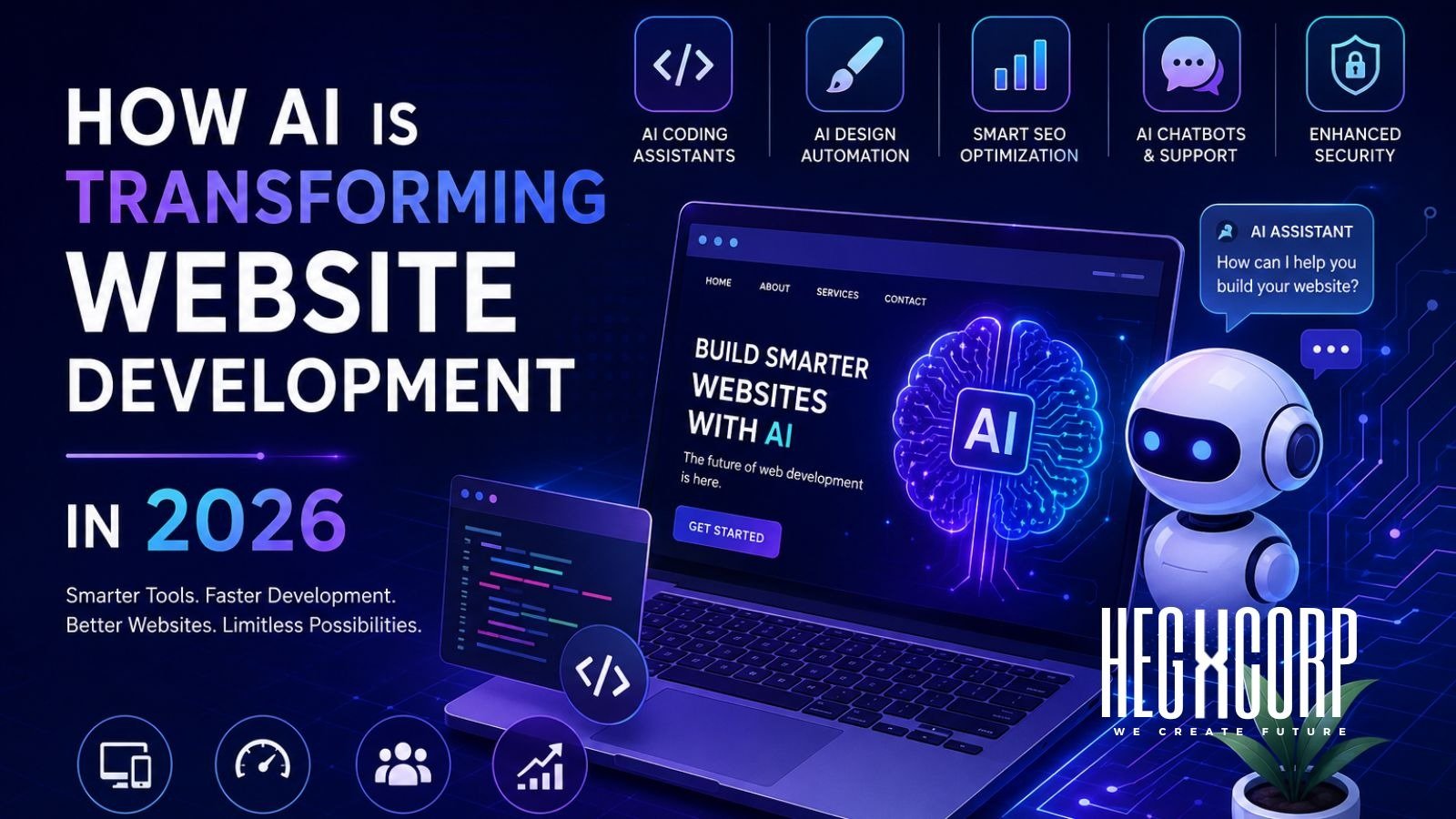
Artificial Intelligence (AI) has evolved from a futuristic concept into a powerful force reshaping industries worldwide. In 2026, website development is experiencing one of the most significant transformations driven by AI technologies. From automated coding and intelligent design tools to personalized user experiences and advanced cybersecurity, AI is changing how websites are built, managed, and optimized.
Businesses, developers, and digital agencies are increasingly adopting AI-powered solutions to streamline workflows, reduce development costs, and create more engaging online experiences. As competition in the digital space continues to grow, leveraging AI in website development is no longer optional; it has become a necessity.
The Rise of AI-Powered Website Development
Traditional website development often required extensive coding knowledge, design expertise, and countless hours of testing and optimization. AI is now simplifying these processes by automating repetitive tasks and providing intelligent recommendations.
Modern AI tools can generate website layouts, write code snippets, optimize content, and even troubleshoot technical issues. This allows developers to focus more on creativity and innovation while AI handles time-consuming technical tasks.
The integration of AI has significantly reduced project timelines, enabling businesses to launch websites faster than ever before.
AI Coding Assistants Are Boosting Developer Productivity
One of the most impactful advancements in web development is the emergence of AI coding assistants. These tools can analyze code, suggest improvements, detect bugs, and generate complete code blocks based on simple instructions.
Benefits of AI coding assistants include:
- Faster code generation
- Reduced development errors
- Improved code quality
- Increased productivity
- Better collaboration among development teams
Developers can now create complex website functionalities in a fraction of the time previously required. This acceleration allows businesses to adapt quickly to changing market demands and customer expectations.
AI-Driven Website Design Is Changing Creativity
Website design has traditionally required extensive design knowledge and user experience expertise. AI-powered design tools are transforming this process by generating layouts, color schemes, typography suggestions, and responsive designs automatically.
These intelligent systems analyze industry trends, user behavior, and design best practices to create visually appealing websites.
Advantages of AI-driven web design include:
Faster Design Creation
AI can generate multiple design concepts within minutes, helping businesses choose the best layout quickly.
Improved User Experience
Machine learning algorithms study user behavior and recommend design improvements that increase engagement and conversions.
Consistent Branding
AI ensures visual consistency across websites, landing pages, and digital marketing materials.
As a result, businesses can achieve professional-quality website designs without requiring large design teams.
Personalized User Experiences Through AI
Personalization has become a critical factor in website success. Modern users expect content, products, and recommendations tailored to their interests and behaviors.
AI enables websites to:
- Analyze visitor behavior in real time
- Recommend relevant products and services
- Customize content based on user preferences
- Improve customer engagement
- Increase conversion rates
For example, e-commerce websites use AI to recommend products based on browsing history, while content websites deliver personalized article suggestions to keep visitors engaged longer.
This level of personalization creates a more meaningful user experience and drives business growth.
AI Is Revolutionizing Website SEO
Search Engine Optimization (SEO) remains one of the most important aspects of website success. In 2026, AI-powered SEO tools are helping businesses achieve higher search engine rankings more efficiently.
AI can assist with:
Keyword Research
Advanced algorithms identify high-performing keywords and emerging search trends.
Content Optimization
AI analyzes content and suggests improvements for readability, keyword placement, and search engine relevance.
Technical SEO Audits
Automated systems detect website issues such as broken links, slow loading speeds, and indexing problems.
Competitor Analysis
AI tools evaluate competitor strategies and identify opportunities for growth.
These capabilities help businesses create search-engine-friendly websites while saving valuable time and resources.
AI Chatbots Are Enhancing Customer Support
Customer service is another area where AI is making a substantial impact. AI-powered chatbots can provide instant assistance to website visitors 24 hours a day, seven days a week.
Modern chatbots can:
- Answer customer questions
- Generate leads
- Schedule appointments
- Process orders
- Provide personalized recommendations
Unlike traditional customer support systems, AI chatbots continuously learn from interactions and improve their responses over time.
This leads to higher customer satisfaction and reduced operational costs.
AI-Powered Security Is Protecting Websites
As cyber threats become increasingly sophisticated, website security has become a top priority. AI is helping businesses identify and prevent security risks before they cause damage.
AI security systems can:
- Detect unusual activity patterns
- Identify malware and vulnerabilities
- Prevent fraudulent transactions
- Monitor website traffic continuously
- Respond to threats in real time
By leveraging machine learning, these systems become more effective over time, providing stronger protection against evolving cyber threats.
The Role of AI in No-Code and Low-Code Development
No-code and low-code platforms have gained immense popularity, allowing individuals with little or no programming experience to create websites and applications.
AI is enhancing these platforms by enabling users to build websites through simple text prompts. Users can describe the website they want, and AI generates layouts, content structures, and design elements automatically.
This democratization of website development allows startups, entrepreneurs, and small businesses to establish an online presence quickly and affordably.
Challenges of AI in Website Development
Despite its advantages, AI also presents challenges.
Some concerns include:
- Overreliance on automation
- Potential security risks
- Ethical considerations regarding AI-generated content
- Reduced need for certain repetitive development roles
- Quality control issues in fully automated systems
Businesses should view AI as a tool that complements human expertise rather than replacing it entirely.
Successful website development still requires strategic thinking, creativity, and human oversight.
The Future of AI Website Development
Looking ahead, AI will continue to play an even larger role in website development. Future advancements may include fully autonomous website creation, predictive user experience optimization, and highly sophisticated personalization systems.
Developers who embrace AI technologies will gain a competitive advantage by delivering faster, smarter, and more effective digital solutions.
As AI capabilities continue to evolve, websites will become more intelligent, adaptive, and user-centric than ever before.
Conclusion
AI is transforming website development in 2026 by streamlining coding, automating design, improving SEO, enhancing security, and delivering personalized user experiences. These innovations are helping businesses create better websites while reducing development time and costs.
Rather than replacing developers, AI is empowering them to focus on creativity, innovation, and strategic problem-solving. Organizations that embrace AI-powered web development today will be better positioned to succeed in the increasingly competitive digital landscape of tomorrow.