


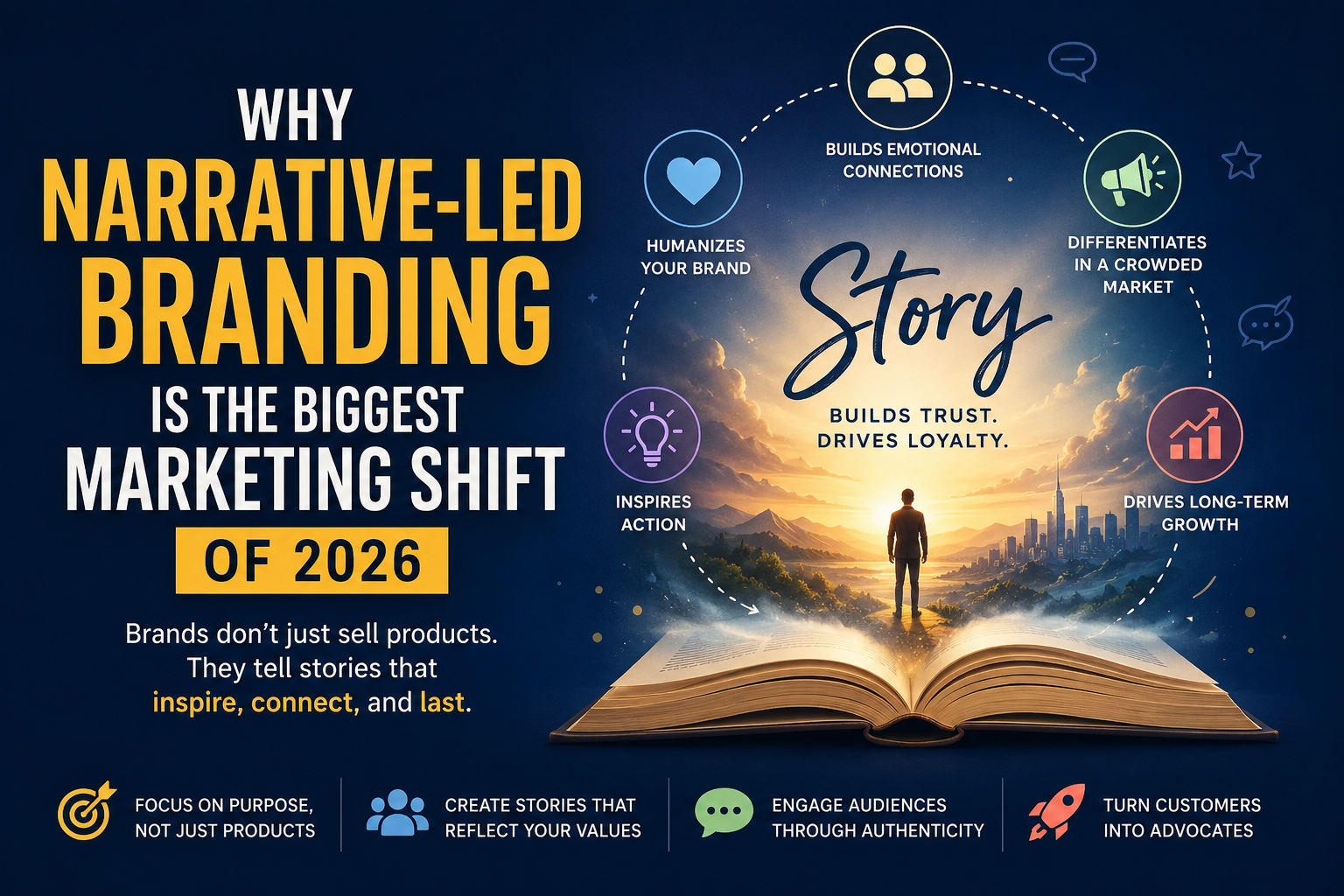
The marketing world is evolving faster than ever. Consumers are exposed to thousands of advertisements every day, social media feeds are crowded with promotional content, and artificial intelligence is making content creation more accessible than ever before. In this environment, brands face a growing challenge: how do they stand out when everyone is competing for attention?
The answer for many successful companies in 2026 is narrative-led branding.
Rather than focusing solely on products, features, or sales messages, brands are increasingly building marketing strategies around compelling stories. They are creating narratives that communicate purpose, values, and identity while establishing deeper emotional connections with customers.
As consumer expectations continue to change, narrative-led branding has emerged as one of the most influential marketing trends of the year.
What Is Narrative-Led Branding?
Narrative-led branding is a marketing approach that places storytelling at the center of brand communication.
Instead of asking, “How do we sell this product?” brands are asking, “What story are we telling, and why should people care?”
A strong brand narrative goes beyond advertising campaigns. It shapes how a company presents itself across websites, social media, customer experiences, product launches, and public communications.
The goal is to create a consistent story that helps customers understand what the brand stands for and how it fits into their lives.
When done effectively, narrative-led branding transforms a company from a seller of products into a recognizable and relatable identity.
Why Storytelling Matters More Than Ever
Consumers today are not simply purchasing products. They are choosing experiences, values, and communities.
Research consistently shows that people remember stories more easily than facts or statistics. Stories create emotional engagement, making brands more memorable and trustworthy.
In 2026, audiences are increasingly skeptical of traditional advertising. They can quickly identify overly promotional messages and often ignore them. However, authentic stories capture attention because they feel more human and meaningful.
Whether it is a startup sharing its mission, a global company highlighting customer success stories, or a brand discussing its social impact, storytelling helps create genuine connections.
The Impact of AI on Branding
Artificial intelligence has significantly changed the marketing landscape.
AI tools can generate content, design visuals, automate campaigns, and analyze customer behavior at unprecedented speed. While these technologies offer major advantages, they have also created a new challenge: content saturation.
As more businesses use AI to produce marketing materials, consumers are encountering larger volumes of similar-looking content. This has increased the importance of differentiation.
Narrative-led branding provides a solution by emphasizing originality, emotion, and human experience qualities that remain difficult to replicate through automation alone.
Brands that combine AI efficiency with authentic storytelling are often achieving stronger engagement and higher customer trust.
Building Emotional Connections
One of the biggest reasons narrative-led branding is gaining momentum is its ability to create emotional connections.
People are more likely to support brands they feel connected to on a personal level. Emotional engagement influences purchasing decisions, customer loyalty, and long-term brand perception.
For example, a fitness company may not simply promote workout equipment. Instead, it may tell stories about personal transformation, perseverance, and health journeys.
Similarly, a technology company may focus on how its innovations improve lives rather than highlighting technical specifications alone.
These narratives help customers see themselves within the brand story.
The Rise of Purpose-Driven Brands
Purpose-driven branding continues to play an important role in modern marketing.
Consumers increasingly want to know what companies stand for beyond profits. They are paying attention to sustainability initiatives, ethical business practices, diversity efforts, and social responsibility programs.
Narrative-led branding allows companies to communicate these values in a meaningful way.
Rather than publishing corporate statements, brands can demonstrate their commitment through real stories, customer experiences, employee perspectives, and community initiatives.
This approach often feels more authentic and credible than traditional promotional messaging.
Social Media Fuels Storytelling
Social media platforms have become ideal environments for narrative-led branding.
Short videos, behind-the-scenes content, creator partnerships, and interactive experiences allow brands to tell stories across multiple formats.
Consumers no longer expect polished advertisements alone. They want transparency, authenticity, and ongoing conversations.
Brands that share their journey, challenges, successes, and values often build stronger communities than those that focus exclusively on sales promotions.
Platforms such as Instagram, LinkedIn, YouTube, and TikTok have accelerated the shift toward storytelling-first marketing strategies.
Benefits of Narrative-Led Branding
Businesses adopting narrative-led branding are experiencing several advantages:
Stronger Brand Recognition
Stories help brands stand out in crowded markets by creating memorable identities.
Higher Customer Loyalty
Customers who connect emotionally with a brand are more likely to remain loyal over time.
Improved Trust
Authentic narratives can strengthen credibility and make companies appear more transparent.
Better Content Performance
Story-driven content often generates higher engagement than purely promotional posts.
Long-Term Business Growth
Strong brand narratives support sustainable growth by building lasting relationships rather than focusing only on short-term sales.
Challenges Brands Must Overcome
While narrative-led branding offers significant opportunities, it also requires careful execution.
Brands must ensure their stories are genuine and aligned with their actions. Consumers can quickly identify inconsistencies between messaging and reality.
Authenticity is critical. A compelling story must be supported by real experiences, values, and business practices.
Additionally, maintaining a consistent narrative across multiple channels can be challenging, especially for large organizations with diverse audiences.
Successful narrative-led branding requires strategic planning, clear messaging, and ongoing commitment.
Looking Ahead
As marketing continues to evolve in 2026, narrative-led branding is becoming more than just a trend it is emerging as a fundamental business strategy.
In a world saturated with advertisements and AI-generated content, storytelling offers something uniquely powerful: human connection. Brands that communicate meaningful narratives are finding new ways to build trust, inspire loyalty, and create lasting relationships with customers.
The companies leading the next generation of marketing are not simply selling products. They are telling stories that resonate, inspire, and reflect the values of their audiences.
For businesses seeking long-term relevance and growth, narrative-led branding may prove to be the most important marketing shift of 2026 and one that will continue shaping the future of brand communication for years to come.