


In today’s digital landscape, website performance plays a major role in online success. Users expect websites to load quickly, respond instantly, and provide a smooth browsing experience. If a website is slow or unstable, visitors are more likely to leave before exploring the content. To improve user experience and encourage better website practices, Google introduced Core Web Vitals as an important ranking factor.
Core Web Vitals are a set of performance metrics designed to measure how users experience a website in real-world conditions. These metrics focus on loading speed, responsiveness, and visual stability. Websites that perform well in these areas often achieve higher search rankings, better engagement, and improved conversion rates.
Understanding how Core Web Vitals affect website performance is essential for businesses, bloggers, developers, and digital marketers who want to stay competitive online.
What Are Core Web Vitals?
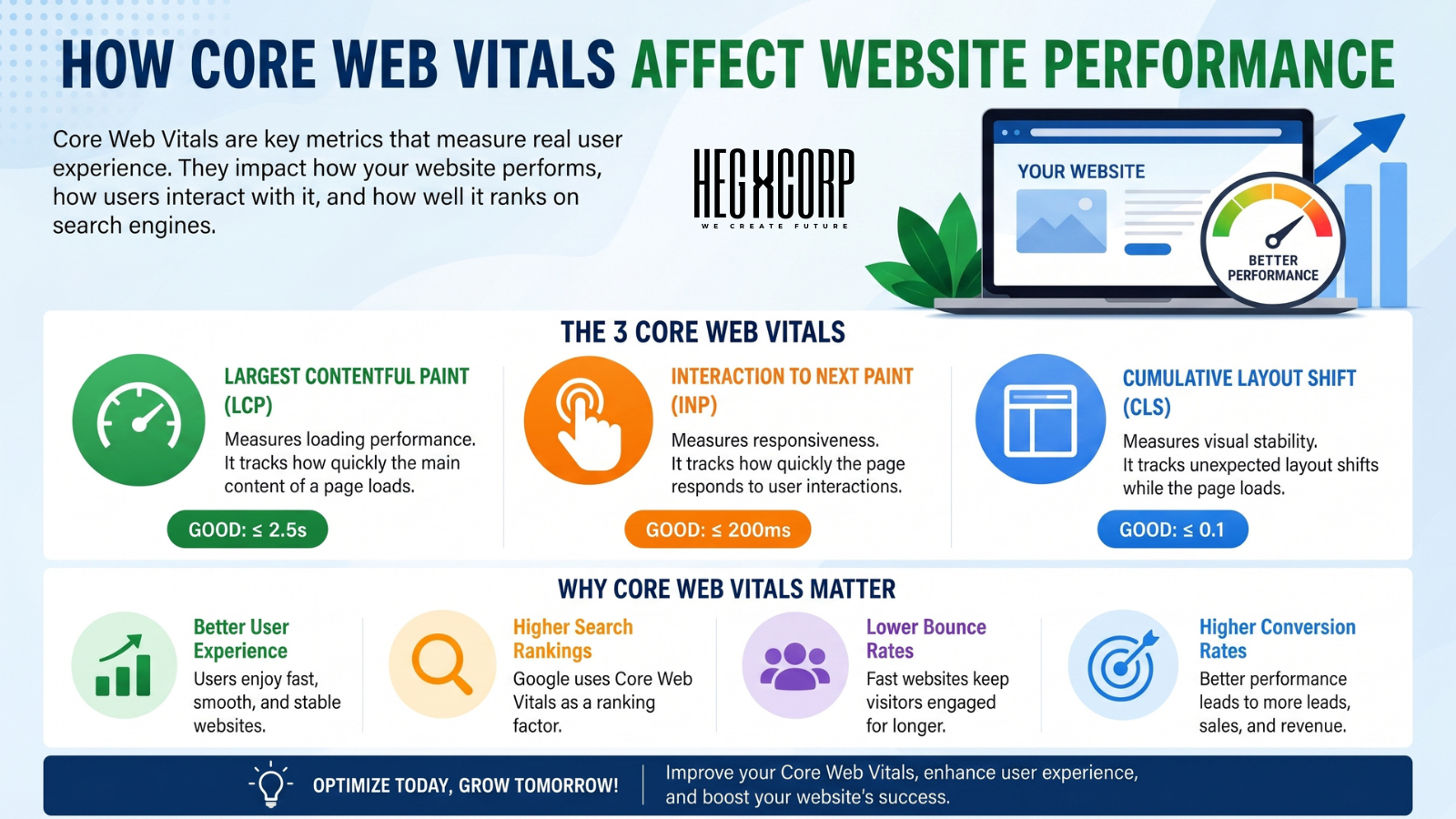
Core Web Vitals are part of Google’s Page Experience signals. They help evaluate the quality of user interaction on a webpage. Google currently measures three main Core Web Vitals metrics:
1. Largest Contentful Paint (LCP)
Largest Contentful Paint measures how quickly the main content of a webpage loads. It tracks the time taken for the largest visible element, such as a banner image or heading, to appear on the screen.
A good LCP score should be within 2.5 seconds of the page starting to load.
If LCP is slow, users may feel the website is lagging or unreliable. Slow loading pages often result in high bounce rates and poor user engagement.
2. Interaction to Next Paint (INP)
Interaction to Next Paint measures how responsive a website is when users interact with it. This includes clicking buttons, typing in forms, or navigating menus.
A responsive website should react almost instantly to user actions. A poor INP score can frustrate visitors and negatively affect user experience.
3. Cumulative Layout Shift (CLS)
Cumulative Layout Shift measures visual stability. It tracks unexpected layout movements while a page is loading.
For example, if a button suddenly shifts position while a user is trying to click it, the page has poor visual stability.
A good CLS score ensures that elements stay in place and users can interact with the website without interruptions.
Why Core Web Vitals Matter for Website Performance
Core Web Vitals directly impact how users perceive a website. A fast, stable, and responsive website creates a positive browsing experience, while a poorly optimized site can drive visitors away.
Here are some key reasons why Core Web Vitals are important:
Better User Experience
Users expect websites to work smoothly across all devices. Fast-loading pages reduce frustration and improve satisfaction. When visitors enjoy using a website, they are more likely to stay longer and explore additional content.
Improved Search Engine Rankings
Google uses Core Web Vitals as part of its ranking algorithm. Websites with strong performance metrics may rank higher in search results compared to slower websites.
Although content quality remains critical, technical performance now plays a larger role in SEO success.
Lower Bounce Rates
Slow websites often lose visitors within seconds. If users have to wait too long for content to appear, they may leave before engaging with the page.
Improving Core Web Vitals helps reduce bounce rates and keeps users active on the website.
Higher Conversion Rates
Website speed and responsiveness significantly influence conversions. Whether it is making a purchase, filling out a contact form, or subscribing to a newsletter, users are more likely to complete actions on a fast and stable website.
Many businesses experience increased revenue after optimizing their website performance.
How Poor Core Web Vitals Affect SEO
Ignoring Core Web Vitals can negatively impact website visibility and user engagement.
Reduced Organic Traffic
Search engines prioritize websites that deliver better experiences. If a website performs poorly, it may lose rankings and organic traffic over time.
Negative Mobile Experience
Most internet users browse websites on mobile devices. Poor optimization can create slow loading times and unstable layouts on smaller screens.
Google follows mobile-first indexing, making mobile performance even more important.
Decreased User Trust
Visitors often associate website quality with brand credibility. Slow or broken experiences can damage trust and reduce customer confidence.
A professionally optimized website creates a stronger impression and encourages repeat visits.
How to Improve Core Web Vitals
Improving Core Web Vitals requires both technical optimization and smart website design decisions.
Optimize Images
Large image files are one of the biggest causes of slow loading speeds. Compressing images and using modern formats like WebP can improve performance significantly.
Use Faster Hosting
A reliable hosting provider improves server response times and overall website speed. Choosing high-performance hosting is essential for websites with growing traffic.
Minimize JavaScript and CSS
Excessive scripts and unused code slow down websites. Removing unnecessary JavaScript and CSS files helps pages load faster.
Enable Browser Caching
Caching allows browsers to store website resources locally. This reduces loading time for returning visitors and improves overall performance.
Use a Content Delivery Network (CDN)
A CDN distributes website content across multiple global servers, helping users access content faster regardless of their location.
Avoid Layout Shifts
Reserve space for images, advertisements, and embedded elements to prevent unexpected layout movements during loading.
Tools to Measure Core Web Vitals
Several tools can help website owners analyze and improve performance metrics:
- Google PageSpeed Insights
- Google Search Console
- Lighthouse
- GTmetrix
- WebPageTest
These tools provide detailed reports and recommendations for optimization.
Final Thoughts
Core Web Vitals have become a critical part of modern website optimization. They influence user experience, search engine rankings, engagement, and conversions. Websites that prioritize loading speed, responsiveness, and visual stability are more likely to succeed in today’s competitive online environment.
Improving Core Web Vitals is not just about satisfying Google’s algorithm. It is about creating a better experience for real users. Businesses and website owners who invest in performance optimization can gain long-term SEO benefits, stronger customer trust, and improved online growth.
As search engines continue to emphasize user experience, optimizing Core Web Vitals should remain a top priority for every website owner and digital marketer.